If our dual star is a difficult to detect brown dwarf or some other
nearly invisible object within the Newtonian framework, our technology
is just reaching the point where we now have the ability to spot low
magnitude, distant objects. Indeed, the largest non-planet, non-moon
object in our solar system was just found last year: Sedna, and the
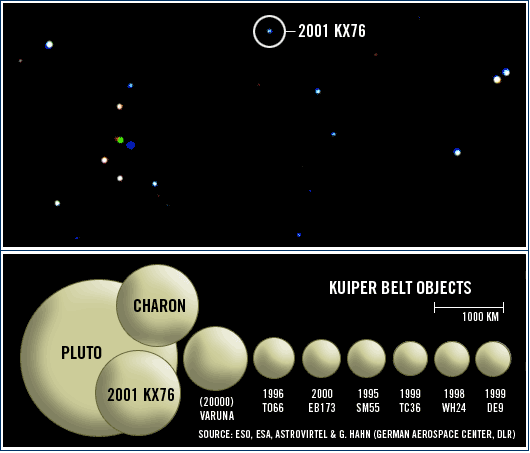
year before this, KX76 a body larger than Pluto’s moon was found.
It was discovered after using virtual observatory techniques to comb
through 18 years of data in 1-1/2 months.
While the probable location of our companion star (under Newtonian
dynamics) is 20 to 30 times farther than Pluto, we are hopeful we
will be able to narrow its probable location and possibly detect it
within the next few years.
|
|
|